The range is the longest-lived machine in most kitchens, which makes it the Half-Rule's easiest customer — nearly every fault is worth fixing on nearly every range.
The east side's kitchens hold every era of cooking iron at once: mid-century electrics still baking level in York's old grid, gas ranges from the nineties in the family houses, induction newcomers on the remodeled streets. The practice speaks all three dialects, and the visit starts the same way in each — proving what the house delivers to the machine before judging what the machine does with it, because older wiring frames innocent ranges every week.
Drifting ovens face an independent thermometer across an entire preheat-and-hold run; paired burner failures implicate shared feeds rather than coincidence; corroded terminals get brightened and retested before any element is condemned. It's unglamorous work that closes a satisfying share of visits without a part at all — and when a part is needed, it lands on its own signed line under a written figure, coupon applied if the job was booked with one.
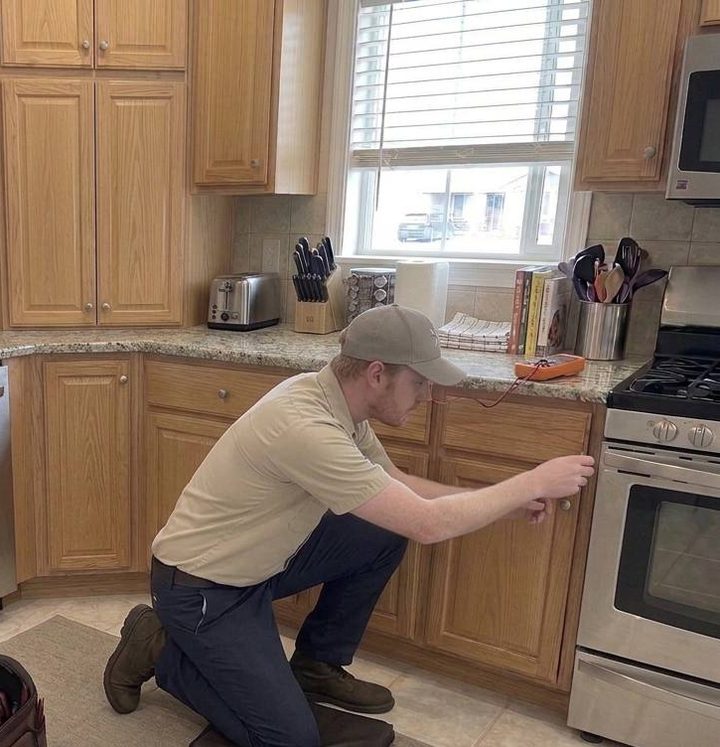
Elements, igniters, switches, sensors — range faults are discrete, mechanical-adjacent, and priced like it. Set against a machine that routinely serves twenty years, the repair-or-replace arithmetic barely needs doing. The verdict here is 'repair' more often than for any other machine on the list.
A cracked glass cooktop on a budget unit, or a control board on a range whose brand left the market years ago — those get the honest math. And when a fault turns out to live in the house's wiring rather than the range, the verdict says that too, in writing, with the visit fee as the whole bill.
It settles arguments the dial can't. If the set number and the real number disagree by more than a pie's tolerance, the visit knows where to start.
When two zones on one side of the cooktop quit in unison, suspect their shared feed rather than twin coincidences — and mention it on the phone; it aims the visit.
Any smell of gas: shut it down, open windows, phone the utility company before anyone else. Dinner can wait; that sequence cannot.
Range entries open with what the house delivers while the elements draw — because idle readings lie and old circuits sag. A meaningful share of east-side range verdicts acquit the machine entirely and name the wiring instead.
Corroded connections impersonate dead elements flawlessly, and the cure is minutes of unglamorous work. These entries close small and satisfying — the ledger's favorite kind.
Old ranges enter the ledger with their soundness counted for them, not against them. Parts get hunted through patient channels, waits quoted honestly, and the verdict treats a forty-year baker as the serviceable machine it is.
More likely a weakening element or igniter delivering heat slower every month — one of the trade's most routine fixes, and squarely worth doing on almost any oven.
Often gloriously so. The good old iron was built serviceable, parts can still be hunted for it, and the verdict treats a sound frame as an asset, not a liability.
Yes — coils, boards and interfaces included. Induction faults read differently but the verdict discipline is identical.
Yes, the $20 comes off any approved repair. The visit-and-verdict fee stays outside it, on purpose.
Tell us the machine, the symptom and — this matters here — roughly how old it is. The callback confirms a window, and the verdict at your door comes with the arithmetic attached.
Your figure goes in writing first, parts on their own signed line — and the $20 coupon comes off the total.
The flat visit fee — quoted when you book — is the whole bill, and it buys the verdict plus a straight word on what to buy instead.
One call books it; one written answer follows it. What happens next is entirely your decision.