Refrigeration is where the verdict matters most: the cheap faults masquerade as death sentences, and the true death sentence masquerades as a repair. This shop tells them apart for a living.
Cold emergencies get triaged the moment you call: doors stay shut, a full freezer defends itself for many hours, and the first open slot on the route goes to the household with the warming milk. That's a standing rule of the book, not a favor — refrigeration is the one appliance where hours genuinely matter.
At the door, the investigation moves upward through the usual suspects in plain view — door seals and circulation, the defrost chain, fans and thermistors — keeping the compressor conversation for last and hoping to skip it. Power-outage weeks — and the bay side has its share — bend the caseload toward relays and controls, which is good news wearing a scary costume. Whatever the ladder finds, the verdict weighs it against the cabinet's age before any figure is written.
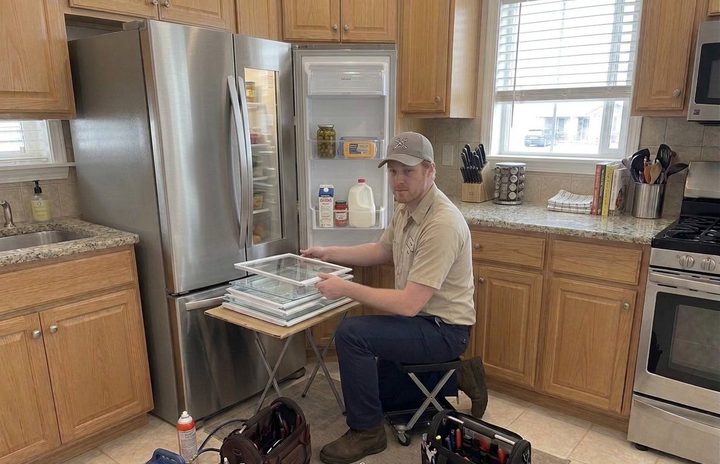
Start relays, defrost heaters, evaporator fans, thermistors — the everyday killers of household refrigeration are modest parts, and they account for far more 'dead fridge' calls than compressors do. The verdict on these is an easy yes at almost any machine age.
When refrigerant has left a fifteen-year-old cabinet, the honest verdict is usually replacement — a sealed-system job on a tired box fails the Half-Rule with room to spare. You'll get that verdict in writing with the machine's realistic remaining life attached, and the visit fee as the whole bill. No one here earns a nickel by talking you into the wrong answer.
Keep it shut and full; jugs of water fill gaps and hold cold. Most outage losses happen through opened doors, not failed machines.
Twice a year, ten minutes, and the compressor breathes easy. It's the cheapest refrigeration service in existence and nobody does it.
The click-pause-click rhythm usually points at start hardware — modest money. Don't reset it repeatedly; describe the rhythm when you call.
Warming-fridge entries start before the van moves: doors-shut advice, freezer-mass strategy, an honest read on how many hours the food has. The clock-beating advice is free; the ledger just records that it was given.
Relays, fans, heaters and sensors get investigated before any compressor conversation because that's where most cold faults actually live. The ledger's cold pages are dominated by modest figures — a pattern the diagnostic order creates deliberately.
When refrigerant has left an old cabinet, the entry shows everything: why the repair fails the Half-Rule, what remaining life a fix would really buy, and what replaces the machine well. The stop verdict costs the visit fee and reads like a second opinion, because it is one.
It goes to the head of the roster, full stop. The phone conversation itself starts the rescue: door discipline and freezer-mass tactics buy real hours while the van repositions.
That split pattern nearly always points at stalled air circulation between the compartments — ice on the coil, or a fan that quit. Both live comfortably on the ledger's affordable half.
Yes, including the premium built-ins on the bay-view streets. Their construction rewards a careful verdict — many are genuinely worth repairing for decades.
Same visit, same verdict discipline. Outbuilding refrigeration books alongside the kitchen machines — one trip, separate written lines.
Tell us the machine, the symptom and — this matters here — roughly how old it is. The callback confirms a window, and the verdict at your door comes with the arithmetic attached.
Your figure goes in writing first, parts on their own signed line — and the $20 coupon comes off the total.
The flat visit fee — quoted when you book — is the whole bill, and it buys the verdict plus a straight word on what to buy instead.
One call books it; one written answer follows it. What happens next is entirely your decision.