Dishwashers take the blame for their plumbing's crimes more than any machine in the house. The verdict here starts by ruling out the innocent explanation — then prices only what's real.
Under every dishwasher filter is an archive of the household's habits — seeds, labels, one shard from the glass that broke in March — and reading that archive is the first act of every visit. A thorough sump excavation cures more dishwashers than any sensor swap, and when it's the whole cure, the job closes at the visit fee without ceremony.
The older streets add a plumbing dimension: long supply runs that deliver lukewarm water no machine can wash well with, drain arrangements that predate the machine by fifty years. The verdict separates the machine's faults from the house's honestly — you'll never be sold an appliance part for a plumbing problem, because the diagnosis would be embarrassed by it.
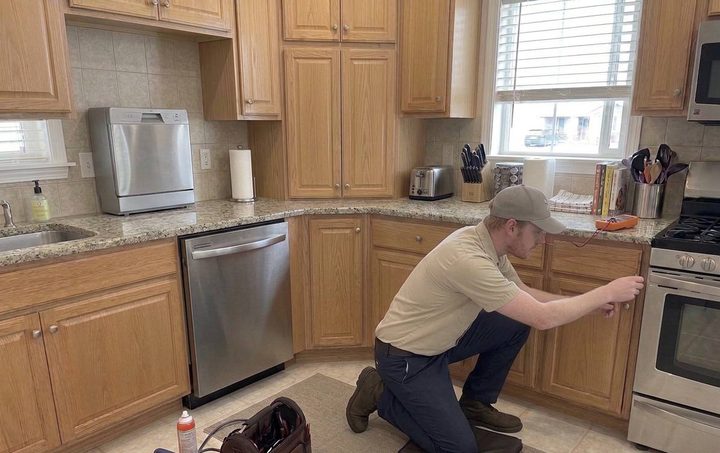
Blocked air gaps, kinked drain loops, lukewarm supply lines, clogged filters — a solid share of dishwasher complaints end in an acquittal for the machine, a small fix or a plumber's note, and a bill that stops at the visit fee. This shop counts those as wins, not lost sales.
Pumps, valves, heaters, door seals and racks are honest repairs that pass the Half-Rule on any dishwasher younger than its second decade. Control electronics face judgment last and only on hard evidence — as the costliest suspect on the list, they deserve exactly that much skepticism.
Whatever sits cold in the pipe becomes the machine's first fill. A brief moment at the sink hands the wash a twenty-degree head start — and some cloudy-glass complaints end right there.
The archive under it grows quietly until the drain code arrives. A monthly rinse is dull and effective, like most good maintenance.
Film that wipes off with vinegar is hard-water mineral; haze that stays is etching. One is fixable housekeeping, the other is permanent — and the test takes a minute.
Under the filter sits the household's recent history, and reading it closes a pleasing share of entries without a single part — logged at the visit fee, machine acquitted, archive cleared.
Air gaps, drain loops and lukewarm supply lines commit crimes dishwashers get blamed for. Those entries end in a written note for a plumber rather than an appliance part — the ledger refuses to bill the wrong defendant.
Control electronics answer questions only after every mechanical suspect has cleared — costliest witness, last on the stand. That sequencing, not luck, is what keeps dishwasher figures small here.
A cupful sitting low in the machine is intentional design. Genuine pooling over the whole tub floor implicates the drain route first — and that route gets traced link by link before the pump takes blame.
Quit resetting it — a breaker interrupting the heat phase is doing its protective job against something real. That symptom moves to the head of the diagnostic order.
Yes — mounting and leveling problems masquerade as leaks and rack complaints all the time, and the fix is honest, quick work.
On any approved repair, yes — $20 off the written figure. The visit fee stays outside the coupon so the verdict stays outside the sales pitch.
Tell us the machine, the symptom and — this matters here — roughly how old it is. The callback confirms a window, and the verdict at your door comes with the arithmetic attached.
Your figure goes in writing first, parts on their own signed line — and the $20 coupon comes off the total.
The flat visit fee — quoted when you book — is the whole bill, and it buys the verdict plus a straight word on what to buy instead.
One call books it; one written answer follows it. What happens next is entirely your decision.