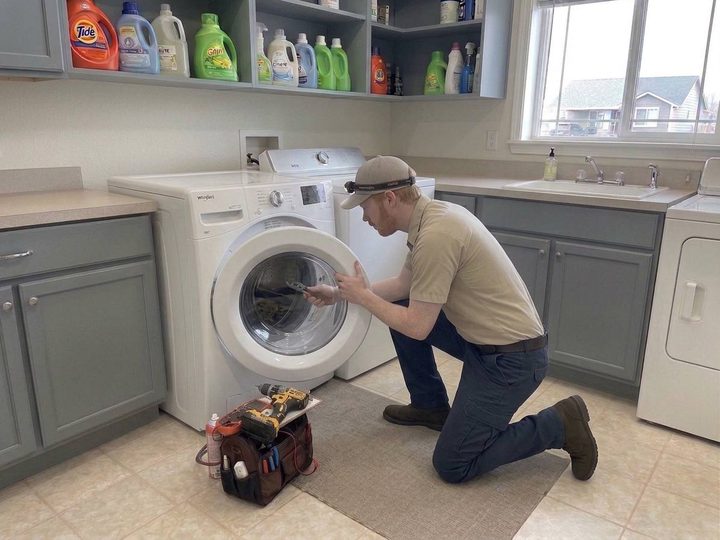
What Bellingham teaches about its washers.
A washer map of Bellingham reads like the city's own biography. The older streets near the water still run top-loaders bought when the mill whistle set the schedule, and those machines mostly earn their repairs — transmissions and couplers on frames built like boat trailers. The hillside subdivisions run modern front-loaders whose faults arrive as letter codes on a screen. And scattered through every quarter sit the multiplex machines that wash for a whole address at once and age three years for every one on the calendar. The workshop sees the full spread every week, which is precisely what keeps the verdicts calibrated.
Calibration matters most on the expensive questions. A roaring spin bearing, a cracked outer tub, a board that drowned in its own condensation — each triggers the same out-loud math: what the fix costs against what this particular machine, at this particular age, is honestly worth. Households across all three ZIPs hear that reasoning before any figure is signed, and a machine standing full of grey water — the classic Bellingham mid-cycle strike — gets drained properly at the start of the visit rather than bailed into a bucket at the end of it.
The house's age predicts the plumbing; the machine's age predicts the fault. Bellingham pairs them in every combination, so the visit checks hoses, valves and standpipes as carefully as drums and boards — whichever generation each belongs to.
A washer that quits loaded is a small emergency anywhere in town: breaker off, door shut, early slot. Water comes out through the pump path, floors stay dry, and the diagnosis starts once the machine is safe to open.