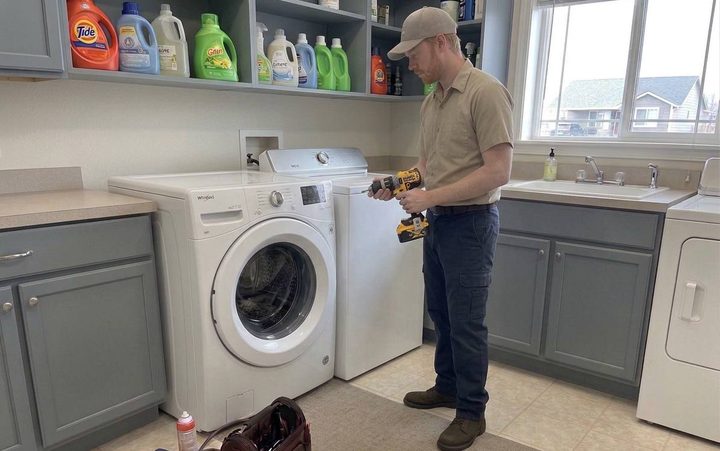
What Bellingham teaches about its dryers.
Take the long view from the Texas St bench and Bellingham's dryer caseload sorts itself by era, not by luck. The city grew in rings: tall old houses near the water with laundry in stone-cool basements, mid-century blocks where the machine landed in a garage corner, and the newer hillside stock that tucked stacked pairs into second-floor closets. Each ring fails its own way — long crawlspace vent runs in the old rings, crushed transition hose behind garage machines in the middle ones, lint-tight rooftop terminations on the new hills — but the arithmetic that follows never changes with the address.
That arithmetic is the point of the visit. The airflow gets measured before any component is doubted, because a city breathing marine air off the bay produces more choked vents than broken dryers in any given month. When the fault is real — a heater bank, a seized roller kit, a control that lost its mind — the repair's cost stands next to the machine's honest worth, the figure goes on paper for a signature, and the answer is allowed to be 'stop' as often as it is 'fix'. One town, three ZIP codes, no second version of the rules anywhere in it.
Years of calls across town build a private atlas: which streets hide crawlspace runs, which hillsides vent through the roof, which garages pinch the hose behind the drum. Arriving with the map shortens the hunt — and the bill that follows it.
98225, 98226 and 98229 share a single book and a single standard. A dryer call from the far lake road claims a slot by the same rule as one from the next street over — order taken, no geography tax.